
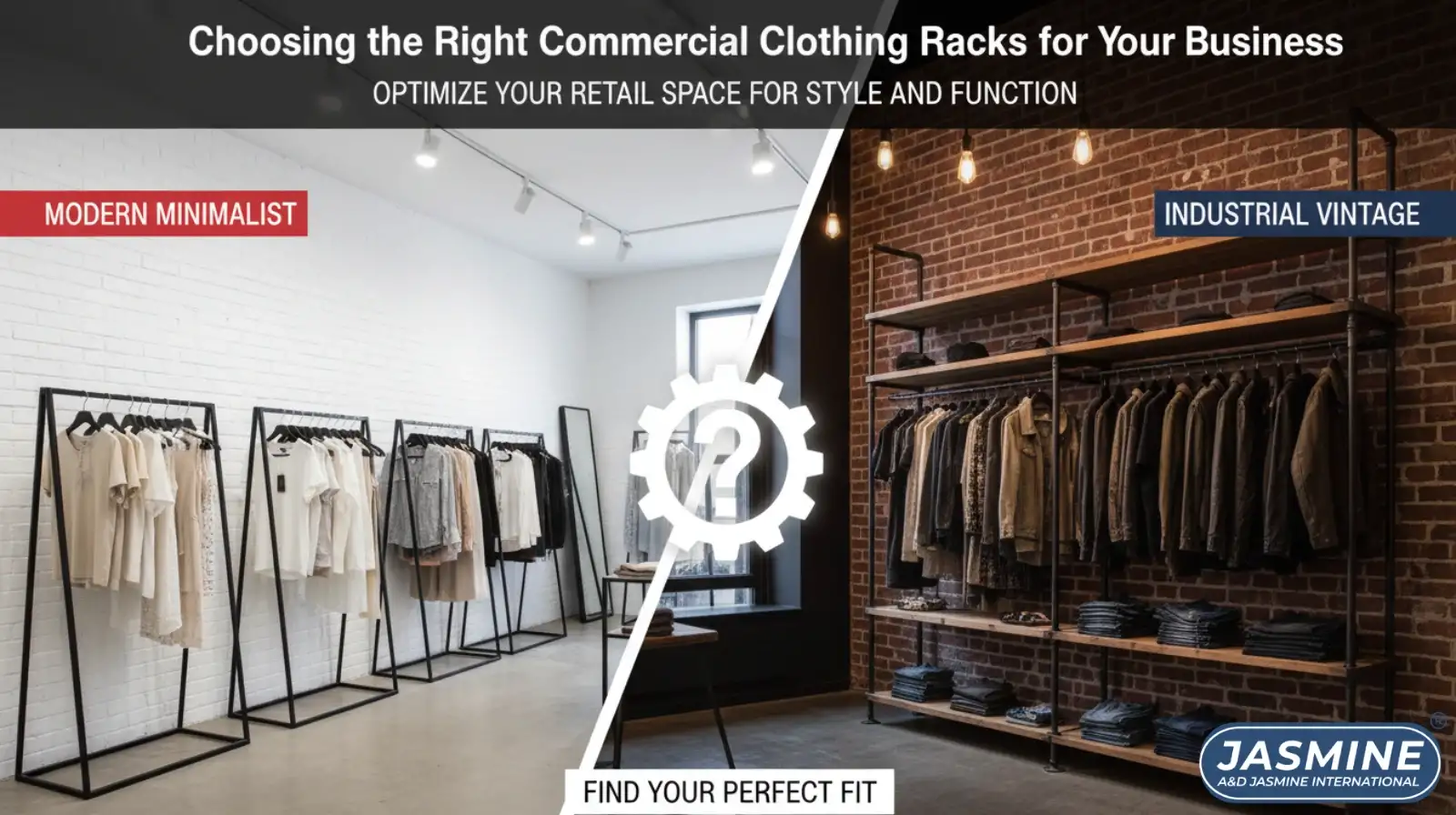
The characteristics of successful retail clothing stores (regardless of whether they are boutiques or multi-location fashion chain stores) include having consistent characteristics on clothing merchants' racks. These racks do not simply display products; they help focus customers' attention on specific products; they influence how customers move through your store; and they tend to create a customer experience that is conducive to the purchase of items.
When it comes to choosing commercial clothing racks, it is much more than a purchasing decision; it will impact your ability to build a retail environment that helps you generate sales. When you have the wrong rack, your store will be cluttered; it creates an inconvenience for your employees, and it will cause your store to lose valuable pieces of inventory. Conversely, the right rack will allow you to develop a better image of your company (the image that your customers have of you), give you a better view of your product lines, and assist you in subtly directing your customers to purchase higher-end merchandise.
This guide will assist you with your decision-making process by helping you to see the choices of the type of racks. As you go through this guide, visualize how your choices will impact the flow of traffic, the type of experience your customers will receive, and subsequently, the impact that these changes will have on your profitability.
Before choosing a rack, imagine yourself inside your store during a busy hour. Customers move like streams of water; they follow the open paths, slow at visual anchors, and avoid tight corners. The shape and size of your racks will either support this natural flow or disrupt it.
Start by mapping your space:
A store with poor traffic flow feels crowded and spoils the shopping experience for both customers and staff. In many scenarios, the cause of a drop in sales floor performance is a floor layout guided by inventory, not by customer behavior.
Tip
Walk your space with a staff member during restocking. If either of you feels cramped or slowed down by racks, your customers feel it too.
Every clothing rack has a particular design appeal and is made to complement the clothing display. Some are minimal and modern, others strong and industrial, and some are flexible workhorses built for heavy stock.
These are perfect when you want a minimalistic appeal and open visibility. Straight racks work the best for formal pants, suits, and formal wear collections. The shelf display sends a clear message to the shopper: We’re organized. We value clarity. And this message goes well with the formal nature of the clothing.
They are best suited for high-volume retail environments. Their design makes the customers browse the collection in circles, discovering items like they’re exploring a hidden trove. If you are selling casual wear like T-shirts, jeans, or seasonal sale items these shelves display items in a way that forces the customer to browse through most of the collection, which maximizes the chance of sale.
These offer the right blend of solid build, mobility, and reliability. Their display effectiveness works really well on launch days.
These serve stores that want structure and multi-level presentation. They feel premium and fit businesses with layered product lines—outerwear, denim, shoes, accessories.
These create an organized, modern feel. Perfect for stores that want minimalism or want to create themed collections along walls.
Think about your bestsellers. Are they long and heavy? Short and light? Seasonal? If you're constantly refilling the same items, choose racks that make replenishment fast. If you're displaying premium pieces, pick racks that feel premium too. There are multiple types of racks, such as pants racks, wine racks, and shoe racks.
Imagine a customer tugging on a hanger, but the rack wobbles. Or worse, leans. Such a rack will damage customer trust.
Buying a low-quality rack is costlier than buying a durable one not just in replacement costs but in damage to brand image. Your racks represent your professionalism.
Successful clothing businesses evolve to meet the demands. Fashion trends change fast, and as a clothing store, your inventory selections will also change to reflect that, and so will the seasonal changes. Your racks must be versatile enough to handle these changes. They should be strong enough to tolerate the bulky winter wear and versatile enough to hang delicate summer clothes.
If your store frequently updates displays or hosts seasonal launches, mobility and quick reconfiguration can save hours. This means better productivity and more sales since the time your staff have more time to cater to customers rather than shifting racks.
Clothing racks aren’t just functional; they also contribute to your clothing store’s customer perception. Whenever the customer walks into the store, the rack arrangement has a particular aesthetic appeal that conveys a brand identity.
Your Store’s Personality Should Guide You. Some questions that can help you make a strong store identity are:
Tip
Create a “style board” exactly like you would for clothing. Include your racks. You’ll instantly see if they belong.
Every business faces the challenge of cost vs. durability. But here’s a truth often remembered too late: cheap racks are the most expensive racks.
A rack that lasts 5 years is cheaper per month than one that lasts 1 year, even if the upfront cost is higher.
For instance, if your store has fast-selling inventory and 40–60 new pieces are added weekly, then your racks must be strong enough to handle constant shifting and reloading. Investing up front saves you the future inconvenience of replacements.
Problem: Racks bend, rust, or are easily toppled.
Solution: Before ordering, check the materials' quality and inspect welds to see stability. Inquire about the weight capacity also.
Problem: All long dresses drag on the floor, affecting their visual appeal
Solution: The Best way to prevent this is to match rack height and bar spacing with clothing length.
Tip: It is always best to understand which dimensions your rack should be based on the clothes you are going to be hanging, so read this clothing rack dimensions guide to make the correct decision.
Problem: Customers feel that the store does not allow freedom of movement, and there is a drop in sales conversion.
Solution: Leave a minimum of 3 feet of walking space between racks.
Problem: The shopping display looks mismatched and unplanned.
Solution: Rack selection should be done to match your brand’s personality and the type of clothes collection to be displayed.
Problem: Restocking becomes slow and frustrating.
Solution: Include mobile racks or quick-adjust systems for efficiency.
Selecting the best clothing racks for your store is about more than choosing metal and tubes; it is about providing a foundation for your retail space. The best racks will display your merchandise on elevated surfaces to maximize visibility, streamline operations, and instill confidence in your brand through the way they look and function.
Using the best racks allows customers to move freely through the store, find what they want easily, and have a pleasant shopping experience. It will impact your ability to build a retail environment that helps you generate sales. To ensure quality, partner with a dedicated cloth rack manufacturer like JasmineAD that provides a wide range of racks to choose from, which helps in making better decisions based on your brand vision.
 Lou@e-jasmine.com.tw




 +886-7-6152020